Ceiling repair · Brevard County, FL
Ceiling drywall repair in Brevard County, FL
Brown rings, bubbles, and sags are how Brevard roofs and plumbing announce their problems — often weeks after the storm that caused them. Water-damaged ceiling board removed, replaced, and blended so the patch doesn't read from below, Melbourne to Titusville to the beach.
Leak first. Ceiling second. Always.
A ceiling patch over an active leak is a stain on layaway, and closing a wet cavity invites mold. So the first question on any ceiling job is whether the source — roof, flashing, plumbing, AC condensate — is handled. If it is, the drywall proceeds. If it isn't, you'll be told plainly, because that sequencing is cheaper than doing the ceiling twice.
It matters most here: summer storms and hurricane season produce roof leaks that surface indoors long after the weather. An October stain frequently traces to an August storm.
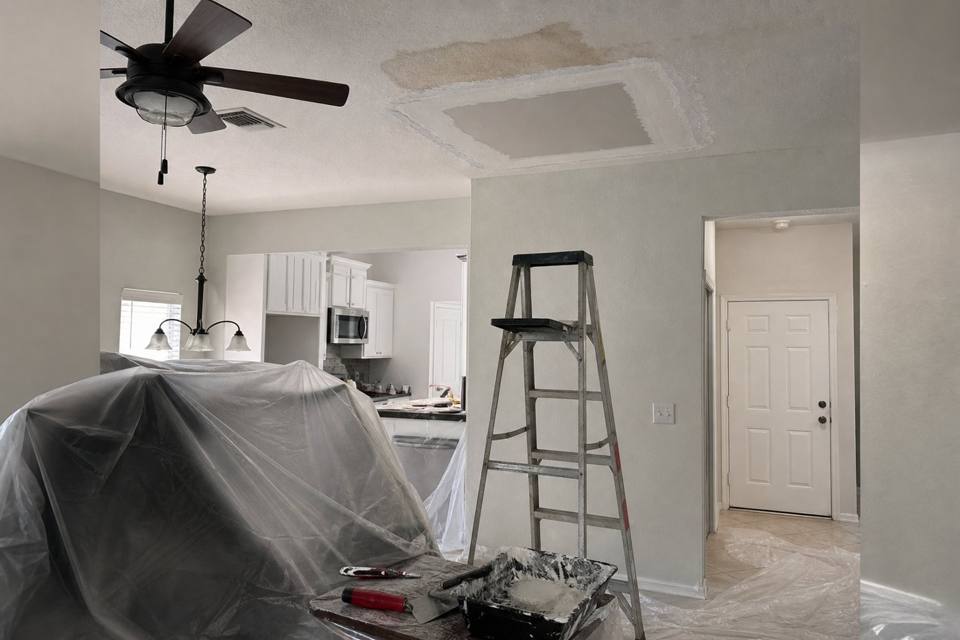
Overhead scope
Small rings to dinner-plate stains: board assessed, compromised section out, new board in, texture blended so the spot doesn't ghost through paint.
Saturated or under-fastened board re-secured or replaced before it fails. Sag gets priority attention — say so when you call.
Openings left by relocated lights, new fans, plumbers, and electricians, closed and blended so the other trades' work disappears.
Ceilings catch raking light from every window, so the blend holds the highest standard in the house. Pre-1980s heavy textures get tested before disturbance.
Ceiling repair questions
The stain is dry now — does the board still come out?
Sometimes no. Firm, flat board with intact face paper can take stain-blocking primer and a refinish. Soft, swollen, or peeling board has lost its strength and should come out. Pressing gently near the stain usually tells the story — exactly the kind of thing the call sorts out.
Can you match my ceiling texture?
That's the heart of ceiling repair — and ceilings catch more light than any wall, so the standard is highest overhead. One note for older homes: heavy texture in pre-1980s construction may contain asbestos and gets tested before it's disturbed.
The ceiling sags but there's no stain. What is that?
Often under-fastened board, undersized board on wide joist spacing, or moisture from above — a slow leak or heavy attic humidity — softening the panel. Sag deserves prompt attention; a saturated panel can eventually fail. Say how big the area is when you call.
Send ceiling repair details
Name the room and roughly how big the stain or sag is. The follow-up call sorts the next step — and whether the leak source needs attention first.
Dealing with a ceiling stain or sag?
Call or send the project details — sagging or active water gets priority attention.